Her career path perfectly illustrates the opportunities and challenges of practicing law internationally, particularly for French lawyers wishing to establish or develop a practice abroad. She discusses, in particular, the specificities of her work as a lawyer in Barcelona specializing in labor law and business law within a Franco-Spanish context.
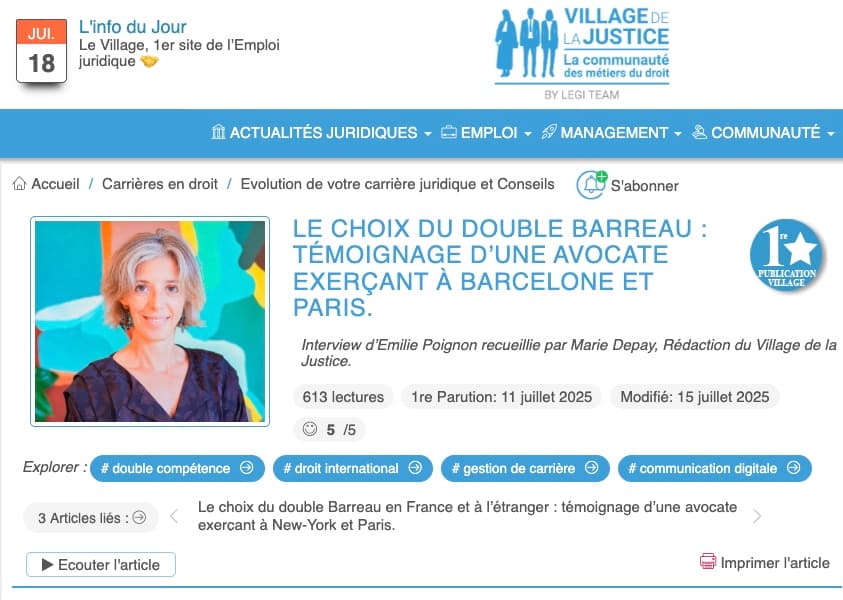
Why become a lawyer in Spain?
It was not a pre-defined career plan, but a series of fortunate circumstances that led Émilie Poignon to practice as a French lawyer in Spain.
While working as an associate in a Parisian firm, she regularly received cases from an international firm located in Barcelona. She then identified a genuine need for legal support for Spaniards living in France, and for French people residing in Spain.
This observation prompted her to settle in Barcelona, where she began as a community lawyer. She then obtained an equivalency in Spanish law and officially became an abogada (Spanish lawyer), allowing her to handle cases on both sides of the Pyrenees with recognized dual expertise.
A dual legal culture serving Franco-Spanish clients
This dual membership allows him to combine the advantages of the French and Spanish legal systems.
She maintains continuous legal monitoring in both countries and offers her expertise to a clientele primarily composed of French citizens residing in Spain, or Spanish companies operating in France.
For clients, working with a bilingual and bicultural lawyer is a real advantage: they benefit from tailored support, in French, within a legal system that is often poorly understood. Procedural deadlines, professional practices, and the roles of courts and legal professionals can differ significantly between France and Spain.
For example:
- In Spain, the deadline for contesting a dismissal is 20 working days, compared to 12 months in France.
- Notifications in Spain are carried out by the courts, not by bailiffs.
These differences require great responsiveness and excellent organization, which Mr. Poignon has been able to implement through advanced digitalization of his firm, the use of collaborative tools and a modern approach to client relations.
Organization between the two countries
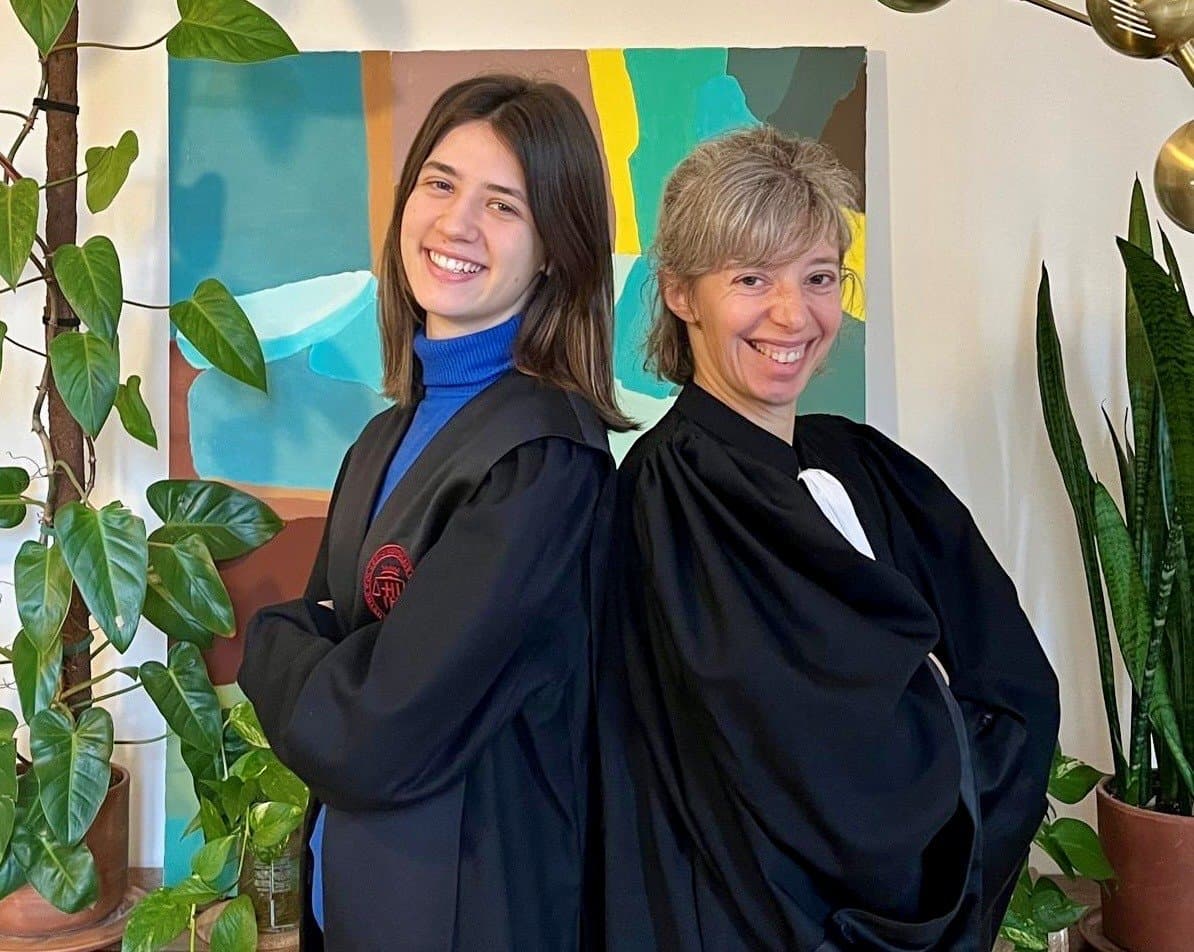
Although she primarily resides in Barcelona, she remains a member of the Paris Bar, both for personal and professional reasons. She travels to France every month, which allows her to maintain active contact with her French clients while continuing to develop her legal practice in Spain.
Advice for French lawyers wishing to practice abroad
In this interview, Mr. Poignon encourages colleagues interested in an international career to:
-
Specialize in a niche area, such as labor law, tax law, or cross-border business law.
-
Find out precisely the requirements for admission to foreign bar associations.
-
Develop their professional network, particularly by joining associations like APPEAL-E, which brings together lawyers from the Paris Bar practicing abroad.
-
Don't remain isolated: mutual support among international lawyers is essential.
A vocation born from experience
With a Master's degree in International Law and experience as a former in-house counsel, Émilie Poignon discovered the legal profession during a temporary position at a law firm. She passed the bar exam while working as a judicial assistant at the Paris High Court. In 2013, she decided to establish herself as an independent lawyer in Barcelona. Today, she advises companies and individuals on their professional and legal matters between France and Spain.
To learn more: « Choosing a dual bar: testimony of a lawyer practicing in Barcelona and Paris ».


Post a comment